THESE MAMMAL ANCESTORS BIRTHED LIVE YOUNG FAR EARLIER THAN THOUGHT
REPORT A PROBLEM WITH THIS SOURCE
SOURCE AGREEMENT & OPEN QUESTIONS
One linked publisher is currently carrying this report in the live cache.
WHAT REMAINS UNCLEAR
RSS excerpts are short and may omit qualifications, timing or attribution. Read the original reports before treating a detail as settled.
WHERE REPORTING MAY DIFFER
Independent comparison coverage has not yet been identified in the current live cache.
SOURCE COMPARISON
| Source | Latest linked headline | Age |
|---|---|---|
| Science News | THESE MAMMAL ANCESTORS BIRTHED LIVE YOUNG FAR EARLIER THAN THOUGHT | 1 hr ago |
WHAT HAPPENED
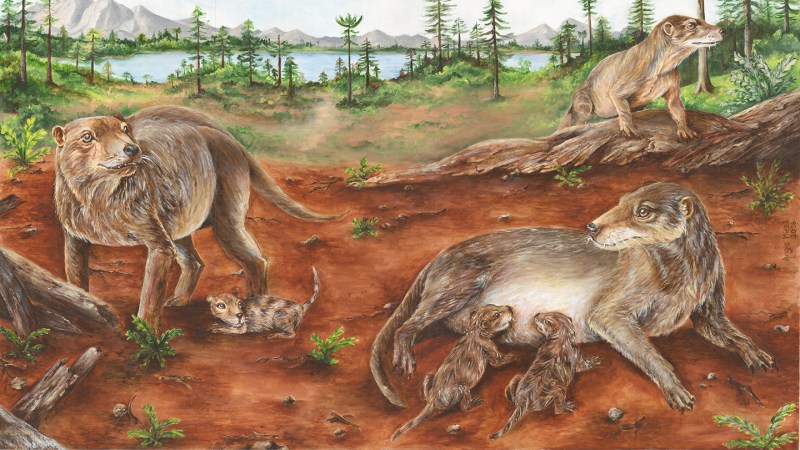
Scientists have uncovered evidence that at least one mammal ancestor reproduced by giving birth to live young, rather than laying eggs. According to a recent Science News report, growth rings on a fossil bone dated to 236 million years ago indicate viviparity in a group of early mammals. This finding pushes back the emergence of live birth in mammals by roughly 200 million years.
The fossil bone, found in a rock layer that dates to the late Triassic period, contains distinct growth rings that researchers interpret as markers of embryonic development in utero. While the study does not identify a specific species, the presence of these rings suggests that some early mammals had evolved viviparous reproduction before the diversification of modern placental mammals. The research was published by the Science News editorial team and does not include direct quotes from the authors.
This discovery challenges long‑standing assumptions that early mammalian ancestors reproduced by laying eggs, a trait seen in modern monotremes. It underscores how paleontological data continue to reshape our understanding of mammalian evolutionary history.
- Growth rings on a 236‑million‑year‑old fossil bone suggest viviparity in an early mammal ancestor
- The evidence indicates live birth emerged much earlier than previously thought
- The finding revises the timeline of mammalian reproductive evolution
RELATED DAMMNEWS COVERAGE
- THE ADULT BRAIN CAN REPAIR ITSELF BETTER THAN SCIENTISTS THOUGHT
Health & Medicine News -- Scienc • 16 hrs ago • HEALTH - STINGRAY LASHINGS UP AS MARINE HEAT WAVE OFF SOUTHERN CALIFORNIA DRAWS MORE TO SHORE
Associated Press • 43 mins ago • TOP - THE END OF OAK STREET REVIEW – SUBURBAN DINO-SURVIVAL ROMP IS MORE TURKEY THAN T-REX
Culture | The Guardian • 14 hrs ago • CULTURE