FARTHEST 'BLACK HOLE STAR' EVER FOUND COULD HELP SOLVE THE JAMES WEBB SPACE TELESCOPE'S LITTLE RED DOT MYSTERY
REPORT A PROBLEM WITH THIS SOURCE
SOURCE AGREEMENT & OPEN QUESTIONS
One linked publisher is currently carrying this report in the live cache.
WHAT REMAINS UNCLEAR
RSS excerpts are short and may omit qualifications, timing or attribution. Read the original reports before treating a detail as settled.
WHERE REPORTING MAY DIFFER
Independent comparison coverage has not yet been identified in the current live cache.
SOURCE COMPARISON
| Source | Latest linked headline | Age |
|---|---|---|
| Latest from Space.com | FARTHEST 'BLACK HOLE STAR' EVER FOUND COULD HELP SOLVE THE JAMES WEBB SPACE TELESCOPE'S LITTLE RED DOT MYSTERY | 2 hrs ago |
WHAT HAPPENED
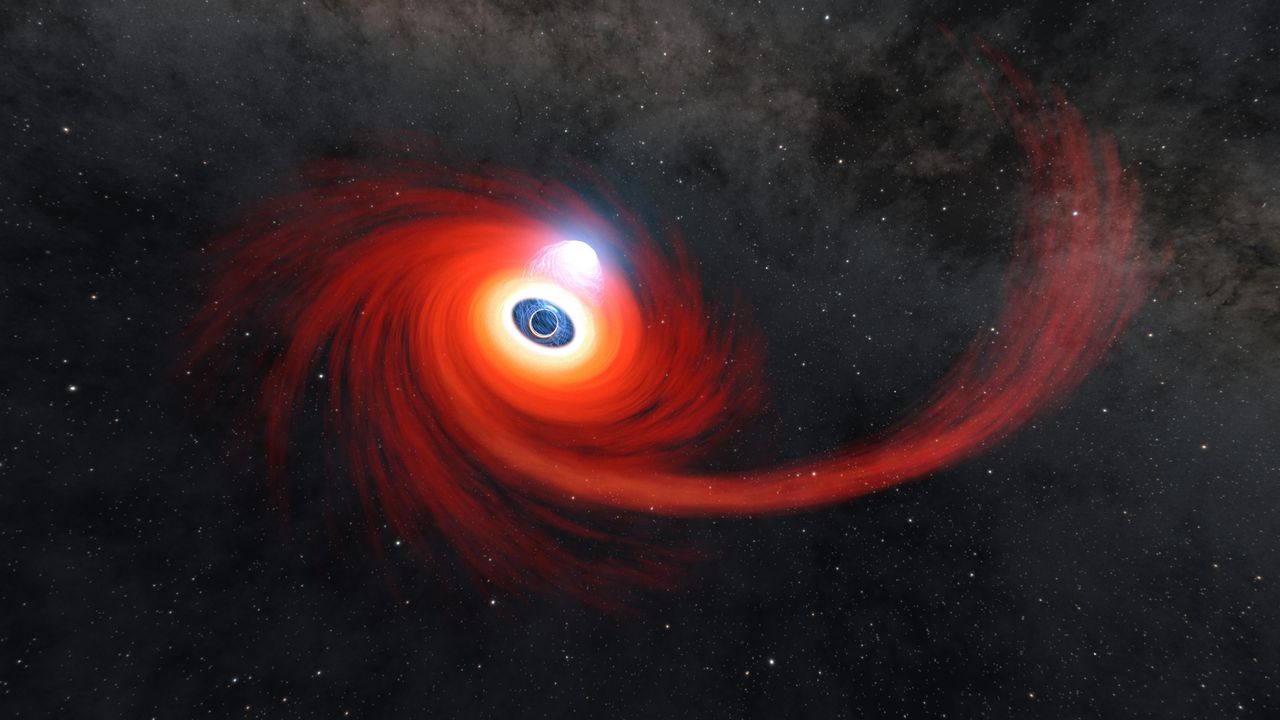
According to Space.com, astronomers have identified the farthest ‘black hole star’ yet discovered. The object, located billions of light‑years away, provides strong evidence that black holes reside at the centers of the mysterious little red dots detected by the James Webb Space Telescope shortly after the Big Bang.
The Space.com report notes that the new black hole star is the most distant of its kind identified to date, strengthening the hypothesis that the little red dots—tiny, dim galaxies observed by JWST—may owe their luminosity to central black holes. While the article does not disclose specific measurements or author names, it emphasizes the significance of linking black hole activity to early‑universe galaxy formation.
Little red dots are among the earliest structures observed by JWST, and their origins are a key question in cosmology. Establishing that black holes sit at their cores could clarify how galaxies grew in the first few hundred million years after the Big Bang.
- Discovery of the farthest known black hole star linked to early galaxies.
- Supports theory that black holes power the little red dots observed by JWST.
- Findings are reported by Space.com; no further details on measurement or authors are provided.
RELATED DAMMNEWS COVERAGE
- IS THIS THE WORLD’S OLDEST IMAGE OF A MIND-ALTERING PLANT?
Arts + Culture – The Conversatio • 6 hrs ago • CULTURE - GOOGLE AIMS FOR INFLUENCERS WITH THE PIXEL 11 CREATOR SUITE
The Verge • 2 hrs ago • TECH - SCIENTISTS TURN STARLINK INTO A GIANT SCANNER FOR EARTH’S UPPER ATMOSPHERE
All Top News -- ScienceDaily • 3 hrs ago • SCIENCE